
Sustainability Embedded in Practice
Sustainability is often associated with rating tools and formal accreditation. These frameworks are valuable, providing structure, accountability, and benchmarking across the industry. Project scale, budget, and client priorities will influence whether accreditation is pursued. For many property owners, however, the priorities are focused on:
Will this building perform well over time?
Will it cost less to operate?
Will it be durable, resilient, and healthy for the people who use it?
Sustainability supports all of these questions. At Agents of Architecture, we embed sustainability into every project because it strengthens long-term value, reduced risk, and improves occupant outcomes.
Below, we share how this translates into practical design decisions across all our projects.
Building Performance
Performance is the foundation of sustainable design. This includes:
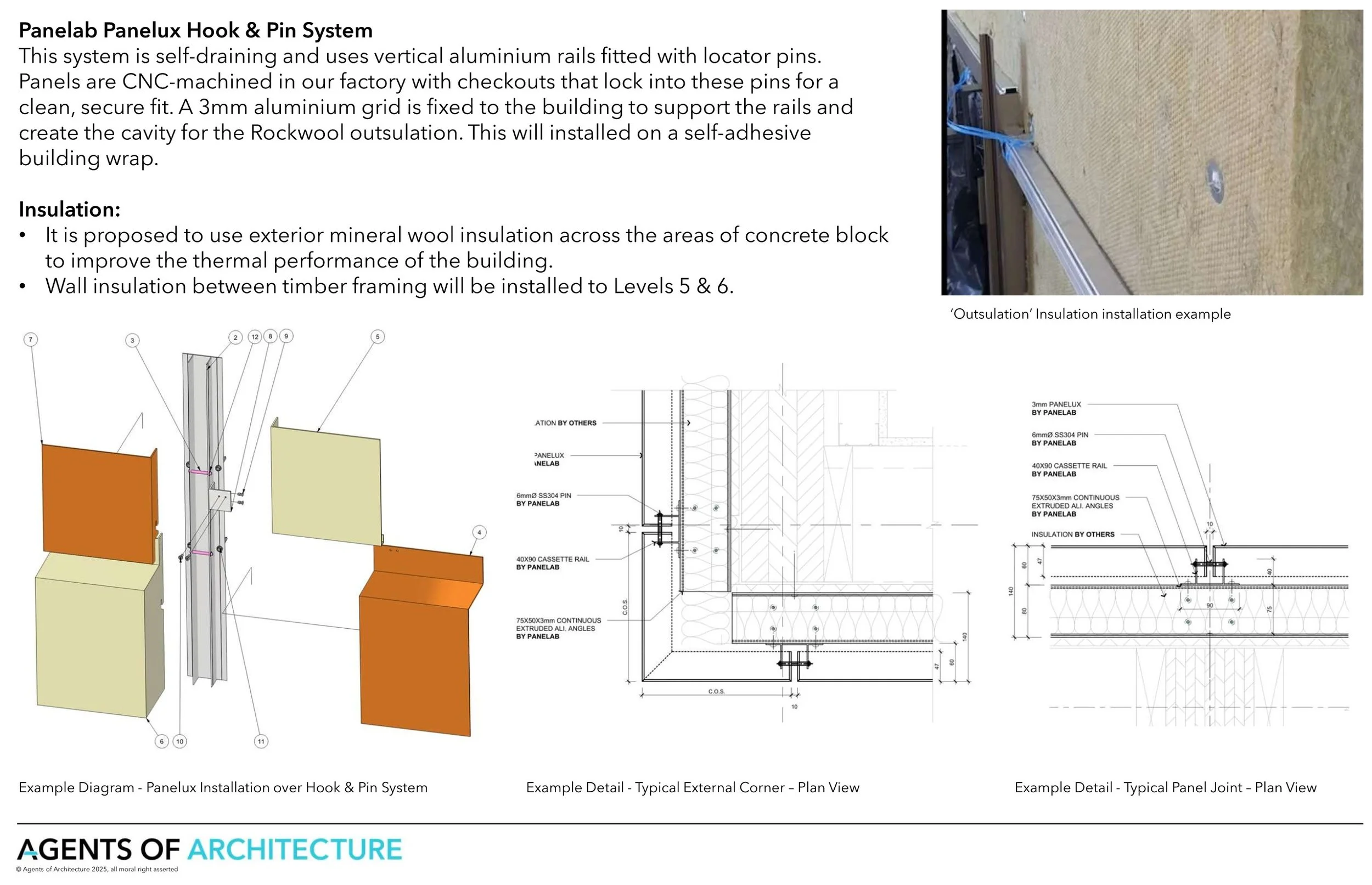
High-performing building envelopes
Thoughtful insulation strategies
Efficient glazing selection
Airtightness detailing
Careful coordination of façade interfaces
For remediation and refurbishment projects, this often means addressing long-standing weathertightness or thermal deficiencies. Upgrading cladding systems, improving waterproofing, and resolving junction details extend the life of the building and reduce future repair cycles.
For owners, this translates to:
Lower maintenance costs
Improved durability
Reduced risk
Greater asset value stability
For occupants, it means:
More stable internal temperatures
Less condensation and mould risk
Improved comfort year-round
2. Designing for Longevity
One of the most overlooked sustainability strategies is durability. Short design cycles and low-cost material decisions can create long-term liabilities. We guide clients toward materials and systems that are:
Proven in the New Zealand climate
Maintainable and accessible
Supported by supplier warranties
Appropriate for exposure conditions
This is particularly relevant for body corporates and commercial building owners. The upfront investment in well-considered materials can significantly reduce future capital works.
3. Operational Efficiency
We look closely at how a building will perform over time. This includes:
Energy-efficient lighting strategies
HVAC system optimisation
Opportunities for passive design
Solar integration where viable
Water management considerations
Even when clients are not targeting certification under frameworks, we still apply the same logic: reduce operational demand where possible. We work closely with building services engineers on these outcomes.
For commercial and industrial property owners, operational efficiency directly affects:
Tenant satisfaction
Operating costs
Lease attractiveness
Long-term investment performance
For residential clients, it reduces energy bills and improves daily living comfort.
4. Healthy Buildings, Healthy People
Sustainability is closely tied to wellbeing. We consider:
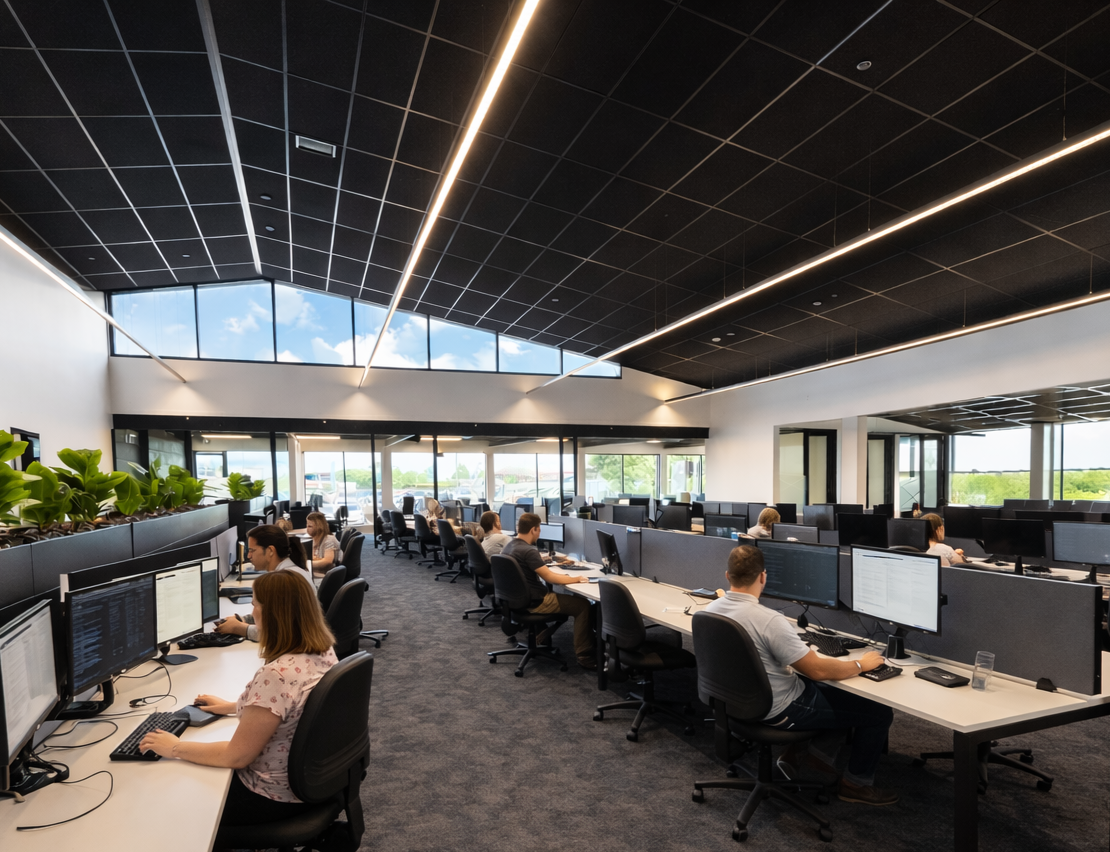
Access to natural light
Ventilation quality
Moisture control
Acoustic comfort
Connection to outdoor space
In apartments, improving daylight access, natural ventilation pathways, and acoustic separation can significantly enhance how residents experience their homes. In workplaces, daylight and air quality influence productivity and satisfaction. A sustainable building should support the people who occupy it every day.
5. Smarter Early Decision-Making
Much of sustainability is determined before detailed design begins. At our Pre-Design stage, we explore:
Site constraints and opportunities
Orientation and massing
Long-term ownership strategy
Risk and lifecycle implications
Cost versus long-term performance trade-offs
Helping clients make the right decisions early often has a greater sustainability impact than late-stage product substitutions. Clarity before commitment reduces waste, redesign, and reactive decision-making.
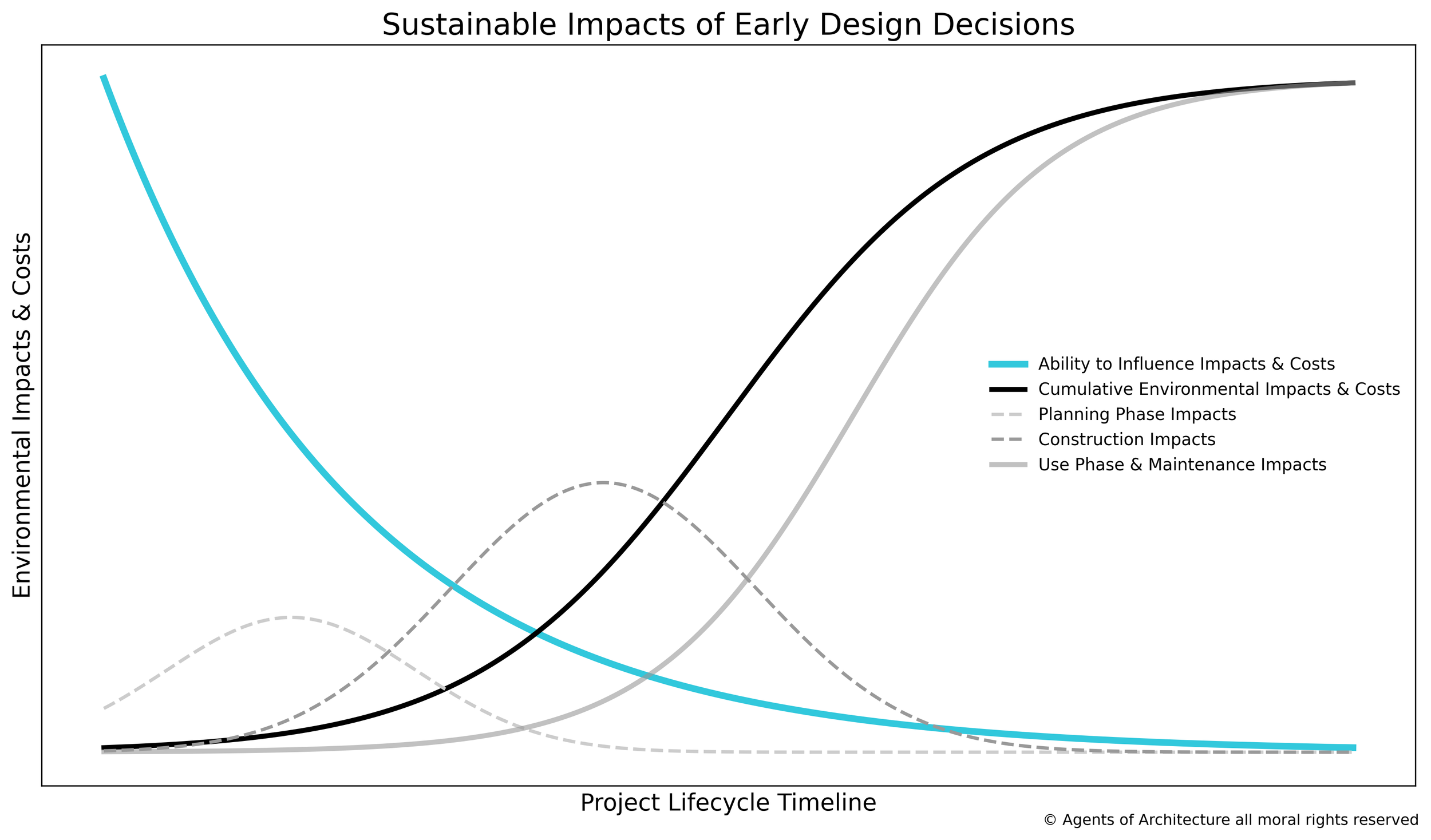
Early planning decisions have the greatest influence on environmental impact and cost outcomes. As a project progresses through construction and into use, the ability to influence performance decreases while cumulative impacts and costs continue to rise.
Sustainability Is Our Responsibility
Regardless of project size or pathway, the fundamentals remain consistent. Building performance, durability, operational efficiency, occupant wellbeing, and informed early decisions shape the long-term success of every building. Many of our clients prioritise:
Lower long-term costs
Reduced maintenance risk
Healthier environments
Improved asset resilience
Our responsibility is to ensure that sustainability is considered early, integrated thoughtfully, and carried through the design and operation of the building. That is how purposeful design delivers positive impact.
Make informed, future-focused property decisions.
If you are considering a new project, refurbishment, or remediation and want to understand how sustainability can support long-term value, we welcome a conversation.
For a deeper look at how we integrate sustainability into design, refer to our previous articles Sustainable Design Practices and Sustainable Initiatives.