
Ventilation in Housing
From Compliance to Comfort
As New Zealand homes become more energy efficient and increasingly airtight, ventilation is emerging as one of the most important aspects of residential design. While ventilation was once considered a matter of opening windows and installing extract fans, contemporary housing requires a more deliberate approach to maintaining healthy indoor environments. Mechanical ventilation is no longer simply a premium feature. It is becoming a critical component in achieving healthy, durable and high-performing homes.
Why Ventilation Matters More Than Ever
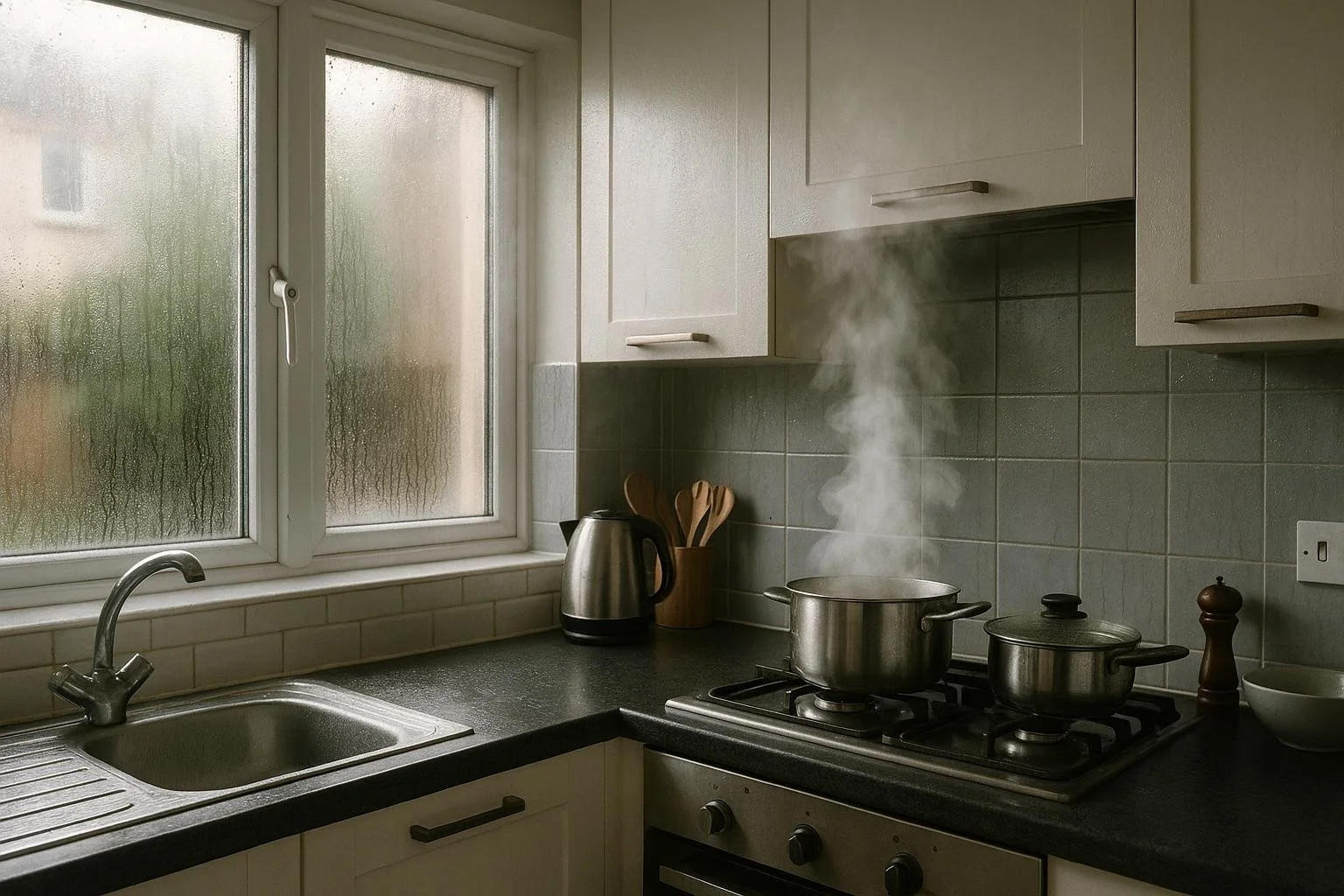
Ventilation is fundamental to occupant health and building performance. Every day, household activities such as cooking, showering, drying clothes and even breathing contribute moisture and contaminants to indoor air. Without adequate ventilation, these pollutants accumulate, increasing the risk of condensation, mould growth and poor indoor air quality.
The New Zealand Building Code Clause G4 Ventilation requires buildings to be provided with adequate ventilation consistent with their occupancy and intended use. The clause specifically seeks to remove moisture, odours, gases and other contaminants to maintain a healthy indoor environment.
At Agents of Architecture, we consider ventilation an essential part of a home’s infrastructure, alongside insulation, heating and waterproofing. By addressing these elements together, we can support healthier indoor environments, improved comfort and better long-term building performance.
Understanding NZBC G4
The primary regulatory framework governing ventilation in New Zealand is NZBC Clause G4. The Acceptable Solution G4/AS1 provides compliance pathways through natural ventilation, mechanical ventilation, or a combination of both. Occupied spaces are generally required to have access to natural ventilation through openable windows, while kitchens, bathrooms and laundries require extract ventilation to remove moisture and contaminants at source.
Historically, compliance has often been achieved through openable windows and intermittent extract fans. However, the Building Code recognises mechanical systems as a valid pathway to achieving the performance requirements of G4, particularly where natural ventilation may be limited or unreliable
As housing typologies become denser and more complex, reliance on natural ventilation alone is becoming increasingly challenging.
The Airtightness Challenge in Modern Housing
Recent changes to Building Code energy efficiency requirements have encouraged better insulated and more airtight building envelopes. While this improves thermal performance and reduces energy consumption, it also reduces the uncontrolled air leakage that many older New Zealand homes relied upon for ventilation.
BRANZ notes that modern homes are significantly more airtight than previous generations of housing and that relying on occupants to open windows consistently is often ineffective. Mechanical ventilation provides a controlled and predictable means of delivering fresh air regardless of weather conditions, outdoor noise or occupant behaviour.
This presents a new challenge for housing design. The traditional approach of "build loose and ventilate accidentally" is being replaced by a philosophy of "build tight and ventilate right."
At Agents of Architecture, we consider ventilation from the early stages of design, coordinating it with the building envelope, internal layout and wider services strategy. This allows the selected system to be integrated effectively into the home and contribute meaningfully to its comfort, energy efficiency and long-term performance.
Beyond Compliance: Health, Wellbeing and Indoor Air Quality
The conversation around ventilation is increasingly focused on health outcomes. Poor indoor air quality has been linked to respiratory illnesses, allergies, discomfort and reduced wellbeing. Moisture accumulation can contribute to mould growth, which is a significant concern in many New Zealand homes.
BRANZ highlights ventilation's role in managing humidity, reducing airborne contaminants and maintaining comfortable indoor conditions throughout the year. Effective ventilation removes excess moisture before condensation can form and helps reduce the concentration of pollutants generated by everyday living.
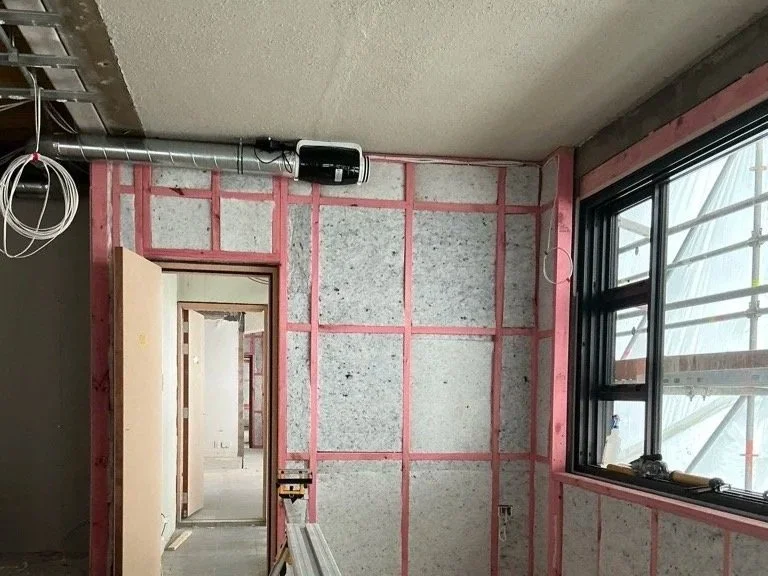
Mechanical systems also provide a consistent level of air exchange that does not depend on occupants remembering to open windows or on favourable weather conditions. This consistency is particularly important in urban environments where external noise, pollution or security concerns may discourage natural ventilation.
Ultimately, the quality of indoor air should be viewed as a fundamental design outcome rather than a secondary consideration.
Mechanical Ventilation Systems Explained
There are several forms of mechanical ventilation commonly used in residential buildings.
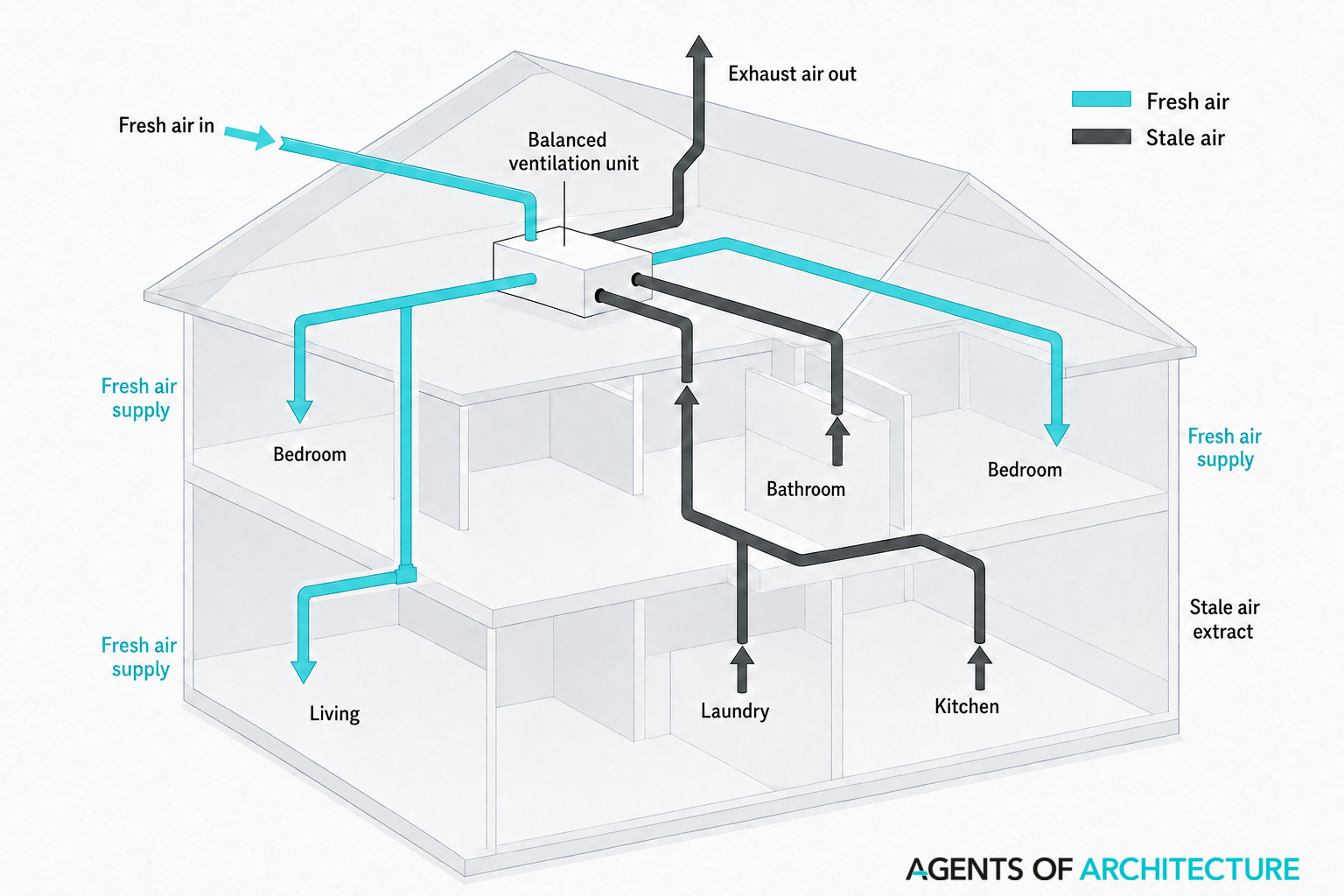
Extract ventilation systems remove stale air from wet areas such as bathrooms, laundries and kitchens. These are often the minimum level of mechanical ventilation required under the Building Code.
Positive pressure systems introduce air into the dwelling, encouraging stale air to escape through natural leakage paths. However, with leak paths being increasingly limited due to improved insulation, positive pressure systems are becoming less common.
Balanced ventilation systems simultaneously introduce fresh outdoor air while extracting stale indoor air, maintaining balanced pressure within the building.
Mechanical Ventilation with Heat Recovery (MVHR) systems represent the most sophisticated approach. These systems recover heat from exhaust air and transfer it to incoming fresh air, reducing energy losses associated with ventilation. BRANZ identifies heat recovery ventilation as an effective strategy for delivering fresh air while conserving energy.
The suitability of each system depends on factors such as climate, dwelling type, airtightness targets and project budget.
The Cost of Doing Nothing
Insufficient ventilation has consequences that extend beyond occupant comfort. Persistent moisture can lead to condensation, mould growth, deterioration of building materials and increased maintenance costs.
Poor indoor air quality can also impact occupant satisfaction and long-term health outcomes, potentially affecting the overall performance and value of a building.
While mechanical ventilation requires an upfront investment, the long-term benefits often outweigh initial costs through improved durability, reduced moisture-related damage and enhanced occupant wellbeing.
As building envelopes continue to improve thermally, the risks associated with inadequate ventilation are likely to become even more pronounced.
Where Housing Design Is Heading
The future direction of residential design strongly suggests greater adoption of mechanical ventilation systems.
BRANZ has highlighted the importance of ongoing air exchange in modern airtight homes and the limitations of relying exclusively on occupants to manually ventilate their dwellings.
Similarly, the Passive House movement places mechanical ventilation with heat recovery at the centre of healthy and energy-efficient building design. The Passive House Institute New Zealand (PHINZ) advocates for highly energy-efficient, healthy homes, while Passive House principles rely on controlled ventilation systems to provide continuous fresh air within airtight building envelopes.
Passive House projects throughout New Zealand demonstrate how heat recovery ventilation can work alongside high-performance building envelopes to deliver superior comfort, indoor air quality and energy efficiency.
As regulatory expectations evolve and public awareness of healthy homes increases, mechanical ventilation is likely to become a defining feature of quality residential architecture.
Ventilation as Essential Infrastructure
Mechanical ventilation should no longer be viewed as an optional upgrade. It is increasingly becoming an essential component of healthy, durable and future-focused housing.
While the New Zealand Building Code allows compliance through natural, mechanical or combined ventilation strategies, both BRANZ research and Passive House principles demonstrate the benefits of controlled mechanical ventilation in modern homes. These systems provide consistent indoor air quality, improved moisture management, enhanced occupant comfort and support for increasingly airtight and energy-efficient building envelopes.
At Agents of Architecture, we assess how ventilation can best support the overall performance and wellbeing outcomes of each home. The appropriate solution will vary between projects, but considering ventilation alongside airtightness, insulation and heating allows us to create healthier, more comfortable and resilient homes. If you are planning a new development, refurbishment or remediation project, talk to our team about how we can support you r ventilation needs.
Sources
New Zealand Building Code Clause G4 Ventilation (MBIE) [building.govt.nz], [codehub.bu...ng.govt.nz]
G4/AS1 Acceptable Solution, Building Performance NZ [building.govt.nz]
BRANZ, Optimal Ventilation? (Build 180, 2020) [branz.co.nz], [codehub.bu...ng.govt.nz]
BRANZ, Build Tight and Ventilate Right[branz.co.nz]
Passive House Institute New Zealand (PHINZ) [passivehouse.nz]
Passive House Principles and Components in New Zealand [stiebel-eltron.co.nz]
ArchiPro, Innovative and Inspiring Passive Houses in New Zealand[archipro.co.nz]